 RFID4U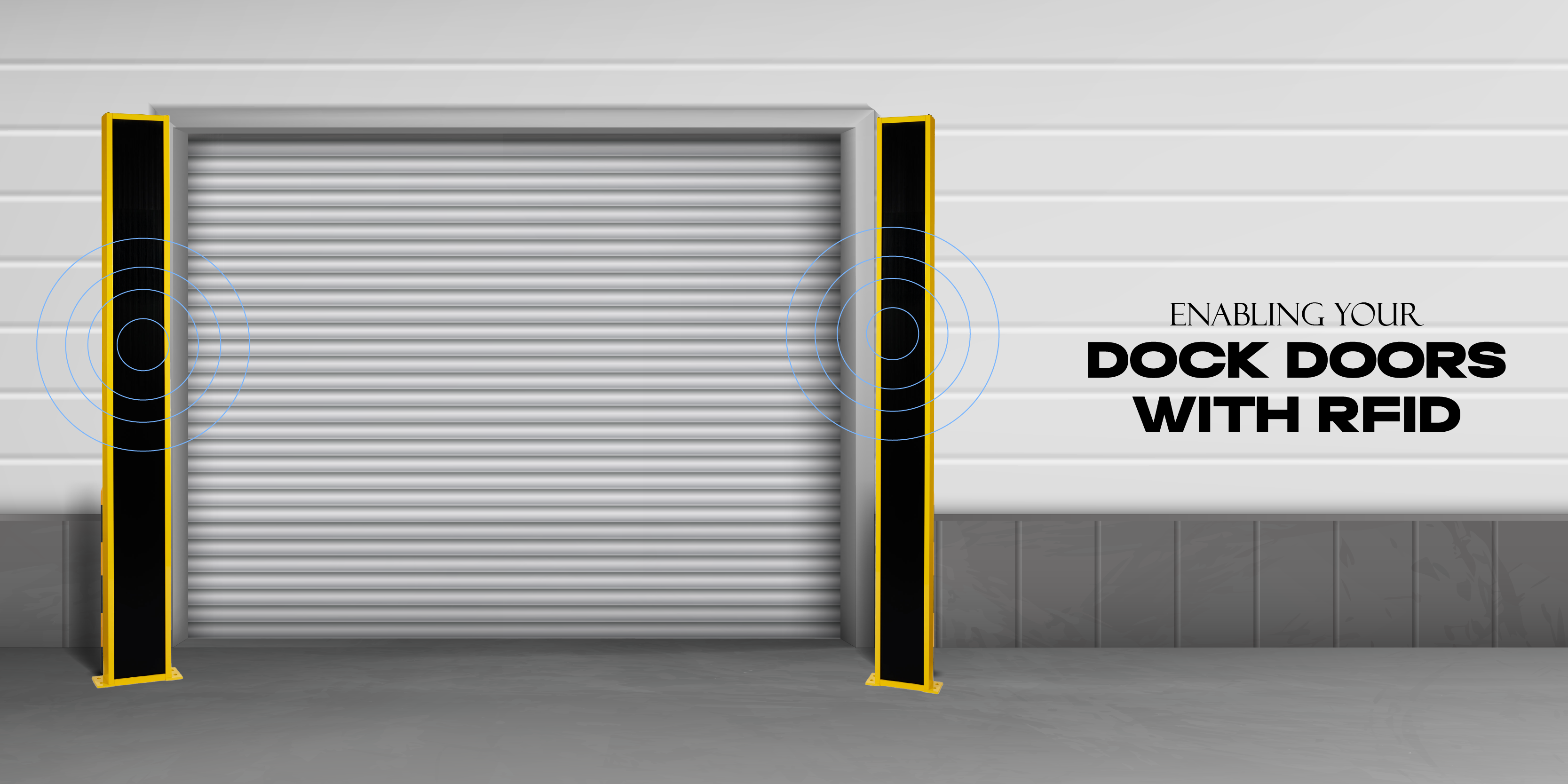
What Is an RFID Portal?
An RFID portal is a fixed, automated scanning point—commonly installed at warehouse dock doors—that uses UHF RFID technology to identify tagged pallets, cartons, and assets as they move in and out of a facility. By creating a controlled read zone using strategically placed antennas and readers, an RFID portal captures item-level data without requiring manual barcode scanning.
Whether integrated at receiving, shipping, or staging areas, RFID portals enable real-time tracking, increased accuracy, and immediate system updates in your WMS or ERP.
Why RFID Portals Are Becoming Standard at Dock Doors
Today’s warehouses operate under increasing pressure: faster shipping expectations, rising labor costs, and the demand for real-time visibility. RFID portals address all three challenges by automating data capture and improving the speed and accuracy of dock operations.
Key drivers for RFID portal adoption include:
- Increased order accuracy expectations
- Labor shortages and the cost of manual scanning
- Greater need for traceability across the supply chain
- Growth in item-level tagging from manufacturers
With these trends accelerating, RFID portals have become one of the most valuable automation tools for modern distribution operations.

How an RFID Portal Works at a Dock Door
An RFID portal consists of several coordinated hardware and software components:
1. RFID Portal RFID Readers
These process tag data and manage multiple antennas.
2. Shielding Panels (optional)
Reduce stray reads from adjacent lanes or doors.
3. Middleware or Edge Software
Filters, validates, and routes tag reads into WMS/ERP systems. Examples include TagMatiks Core which is RFID4U’s off the shelf middleware
4. Sensor or Motion Triggers
Ensure reads occur only when freight moves through the portal.
The Read Zone
The RFID portal creates a virtual “gateway.” When tagged items pass through:
- RFID Antennas emit radio waves
- RFIDTags respond with their encoded ID
- The reader captures the tag data
- Middleware filters and validates it
- The WMS/ERP instantly updates inventory or shipment records
This process takes milliseconds and works without line-of-sight—unlike barcode scanning.
Benefits of Using RFID Portals in Shipping & Receiving
1. Automated Shipment Verification
RFID portals instantly validate receiving paperwork, ASNs, and pick slips without manual scanning.
2. Higher Accuracy Compared to Barcodes
RFID reads multiple items simultaneously—even through packaging—with 99%+ accuracy when engineered correctly.
3. Labor Savings
Workers no longer need to search for labels or scan each carton or pallet individually.
4. Faster Truck Turnaround Times
Automation at the dock accelerates loading and unloading.
5. Real-Time Inventory Visibility
As items pass through the portal, inventory updates automatically across all integrated systems.
6. Reduced Chargebacks & Compliance Issues
Errors are caught at the portal—before the truck leaves.
Best Practices for Installing an RFID Portal
To maximize performance, warehouse environments need proper engineering and tuning.
Key considerations:
- Correct antenna placement and angle
- Calibration of reader power levels
- Proper shielding to avoid cross-door reads
- Tag placement consistency
- Network and middleware configuration
- Integration with WMS/ERP workflows
RFID4U’s field engineers conduct site surveys to ensure each portal performs with high accuracy in real-world conditions.
RFID Portal Use Cases
RFID portals are used across nearly all supply chain verticals:
Receiving Automation
Instantly validates inbound shipments, automates receiving processes, and reduces discrepancies.
Shipping Verification
Confirms correct items leave the warehouse—reducing costly shipping errors.
Cross-Docking
Automated identification enables rapid pass-through processing.
Returnable Asset Tracking
Track reusable pallets, totes, bins, and containers.
Compliance & Audit Trails
Every movement through an RFID portal creates a timestamped digital record.

Integration With WMS, ERP, and Cloud Platforms
Data from RFID portals flows seamlessly into:
- Warehouse Management Systems (WMS)
- Enterprise Resource Planning (ERP)
- Inventory management platforms
- IoT dashboards
- Custom analytics tools
RFID4U’s middleware solutions ensure clean, filtered, accurate RFID data that matches business logic and supports high-volume operations.
Cost and ROI of Installing an RFID Portal
Costs depend on the complexity of the environment, number of dock doors, and integration scope.
Typical investment factors include:
- Number of readers & antennas
- Shielding requirements
- Tagging strategy
- Software & data integration
- Installation labor
- Maintenance & support
ROI typically appears in:
- Reduced labor hours
- Improved shipping accuracy
- Avoided chargebacks
- Faster receiving throughput
- Greater inventory accuracy
Most organizations see ROI within 12–24 months, with many achieving it even faster.
Conclusion
An RFID portal is one of the most effective ways to automate dock door operations, improve accuracy, reduce labor, and gain real-time supply chain visibility. As warehouses continue to adopt automation technologies, RFID portals remain a foundational tool for digital transformation.