 RFID4U
Introduction
Retailers today operate in a highly competitive environment where customer expectations are rising, and operational efficiency is critical. Radio Frequency Identification (RFID) has evolved from an emerging technology into a proven solution that delivers measurable business value. By improving inventory accuracy, reducing costs, and enhancing customer experience, RFID offers clear advantages.

However, many decision-makers still ask, ‘How can we justify the investment?’ The key lies in understanding RFID’s return on investment (ROI) and demonstrating how it directly impacts profitability and long-term growth.
Understanding RFID ROI
ROI in retail technology is about more than just cost savings; it’s about measurable business outcomes. Many retailers fall into the trap of focusing on vanity metrics, such as “number of labels deployed”, rather than linking RFID to real results like reduced stockouts or increased sales. True ROI comes from connecting RFID adoption to tangible improvements in efficiency, accuracy, and profitability.
Key Drivers of ROI
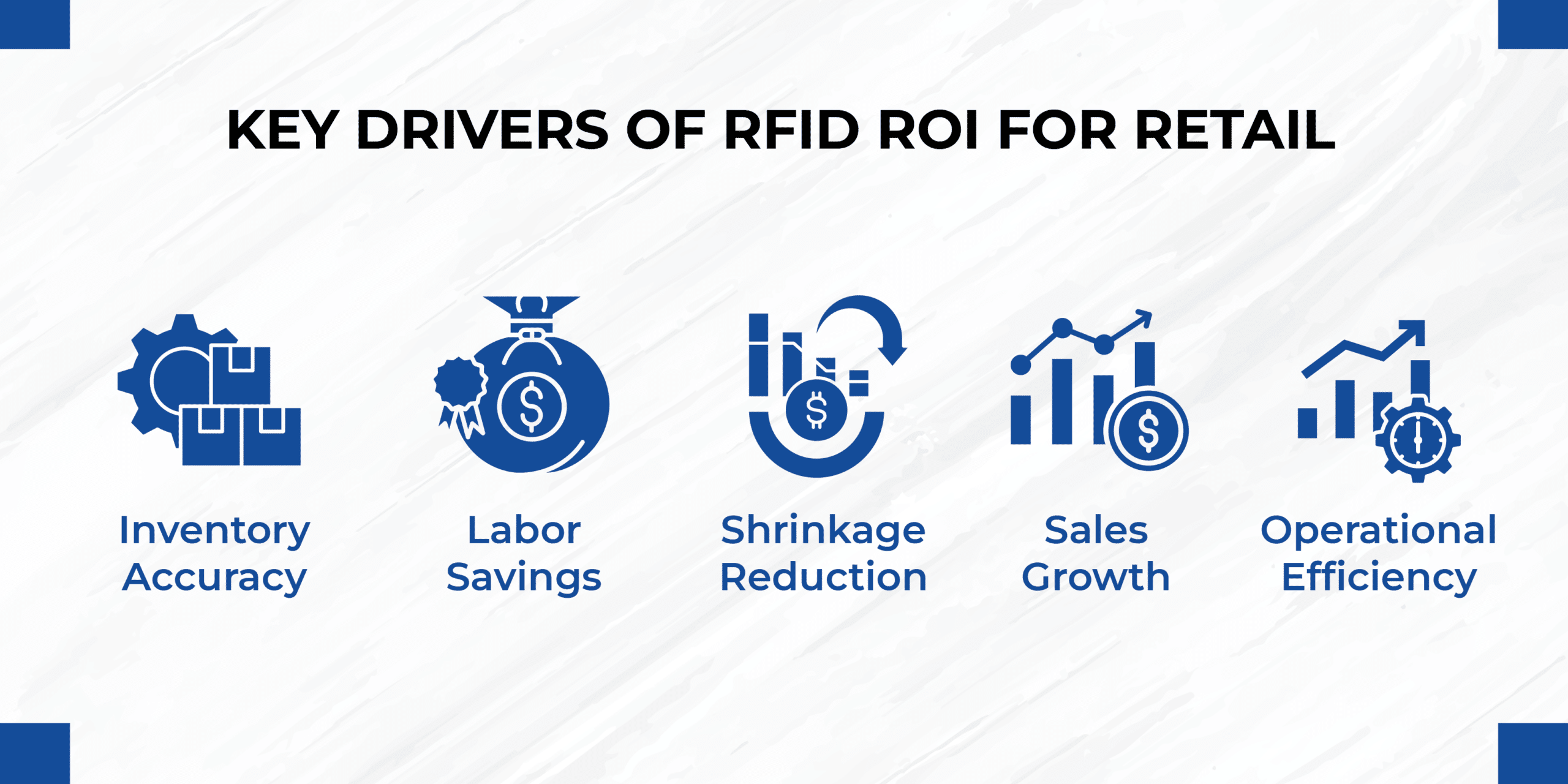
Inventory Accuracy
RFID improves inventory accuracy from around 65% to 95–99%. This ensures shelves are stocked correctly, reduces markdowns, and helps retailers meet customer demand more consistently, directly boosting profitability.
Labor Savings
Manual cycle counts are time-consuming and costly. RFID reduces counting time by up to 96%, allowing staff to focus on customer service and sales, while lowering operational expenses.
Shrinkage Reduction
With item-level visibility, RFID helps track products more effectively. This reduces theft, misplacement, and errors, cutting losses and protecting margins across retail operations.
Sales Growth
Better product availability through RFID leads to higher sales. Studies show a 1.5–5.5% uplift, as customers find the items they want in stock, improving satisfaction and revenue.
Operational Efficiency
RFID streamlines supply chain processes, enabling faster dispatch, fewer chargebacks, and smoother replenishment. These efficiencies improve throughput and accelerate returns on investment.
Cost Components of RFID

One-Time Investment
RFID requires upfront spending on hardware, software, and integration. While this may seem significant, it is a one-time investment that lays the foundation for long-term efficiency, accuracy, and profitability, making it a strategic step toward modern retail transformation.
Recurring Costs
Ongoing expenses such as labels, maintenance, and subscriptions are predictable and manageable. These costs are offset by consistent savings in labor, reduced shrinkage, and improved sales, ensuring that recurring investments continue to generate strong returns year after year.
RFID Labels Affordability
RFID labels have become far more affordable, with prices dropping nearly 80% in the past decade. This cost reduction makes adoption feasible for retailers of all sizes, allowing them to access advanced technology without straining budgets.
Scalability Benefits
Once the system is in place, scaling RFID across multiple stores or warehouses becomes cost-effective. The initial investment supports expansion, enabling retailers to maximize ROI as they grow and adapt to changing market demands.
Long-Term Value
Beyond immediate savings, RFID delivers lasting value by improving customer experience, supporting omnichannel strategies, and enhancing supply chain visibility. These strategic benefits ensure the investment continues to pay off well into the future.
Framework for Calculating ROI
A simple formula helps retailers evaluate payback:
Payback (years) = Total system cost / Net annual savings
Where:
Net annual savings = (Labor savings + Shrinkage reduction + Capital released + Throughput gains) − Recurring costs
For example, a mid-sized apparel retailer might invest $500,000 in RFID. If annual savings total $400,000, the payback period is just over a year.
ROI Benchmarks in Retail
Apparel Retail
RFID adoption in apparel typically delivers payback within 12–18 months. The main driver is improved inventory accuracy, which boosts product availability and leads to measurable sales uplift. This quick return makes apparel one of the strongest sectors for RFID investment.
Grocery Retail
In grocery, ROI comes from reducing shrinkage and speeding up replenishment cycles. RFID helps track perishable items more effectively, minimizing waste and ensuring shelves stay stocked. These improvements translate into cost savings and better customer satisfaction.
Logistics Operations
Logistics companies benefit from RFID through improved throughput, fewer errors, and stronger order accuracy. By streamlining processes and reducing mistakes, RFID enhances efficiency across warehouses and distribution centers, delivering consistent ROI in supply chain management.
Strategic Intangible Benefits of RFID

Customer Experience
RFID ensures products are available when customers need them, reducing frustration and improving satisfaction. This seamless shopping experience builds loyalty and encourages repeat purchases, strengthening long-term customer relationships.
Supply Chain Visibility
By providing real-time data, RFID enhances visibility across the supply chain. Retailers gain better insights into inventory movement, enabling smarter decisions, faster responses, and improved forecasting accuracy.
Omnichannel Advantage
RFID supports seamless integration between online and offline channels. Retailers can fulfill orders more efficiently, offer accurate stock information, and deliver a consistent shopping experience across platforms.
Brand Trust
Accurate product availability and reliable service foster trust in the brand. Customers value transparency and consistency, which RFID helps retailers achieve, strengthening brand reputation.
Sustainability Impact
RFID reduces waste by minimizing overstocking and preventing product loss. This supports sustainability goals, lowers environmental impact, and appeals to eco-conscious consumers, adding long-term strategic value.
Challenges in Justifying ROI
While RFID offers clear benefits, retailers often face challenges in proving ROI. Quantifying shrinkage reduction can be difficult, as theft and misplacement vary across stores. Accurate baseline data on labor costs, error rates, and stockouts is essential to avoid misleading comparisons. Overestimating benefits without pilot studies risks credibility with stakeholders.
Additionally, integration complexity and change management can slow adoption, while upfront costs may seem high without a clear savings forecast. These challenges highlight the need for careful planning and realistic expectations.
Best Practices for Building a Business Case
To justify RFID investment, retailers should begin with pilot projects to gather real-world data before scaling. Focus on one or two dominant ROI drivers, such as inventory accuracy or labor savings, depending on the business model. Present both tangible and intangible benefits—like customer experience and brand trust—to stakeholders. Use conservative estimates to avoid inflated projections and build credibility.
In addition, aligning RFID goals with broader digital transformation strategies and involving cross-functional teams ensures smoother adoption. Continuous measurement and reporting further strengthen the case for long-term ROI.
Conclusion
RFID has become a strategic necessity for modern retail, offering measurable improvements in accuracy, efficiency, and customer satisfaction. It is no longer just a technology upgrade but a business investment that drives long-term value. To justify ROI, retailers must rely on clear metrics, realistic calculations, and alignment with overall business goals.
Those who carefully evaluate their operations and adopt RFID strategically will consistently see strong financial returns, enhanced supply chain visibility, and a competitive edge in today’s fast-changing retail landscape.