 RFID4U
Introduction
Retailers today face constant challenges in managing inventory: stockouts frustrate customers, overstocking ties up capital, and manual errors reduce efficiency. Traditional barcode systems help, but they often fall short in providing real-time visibility.
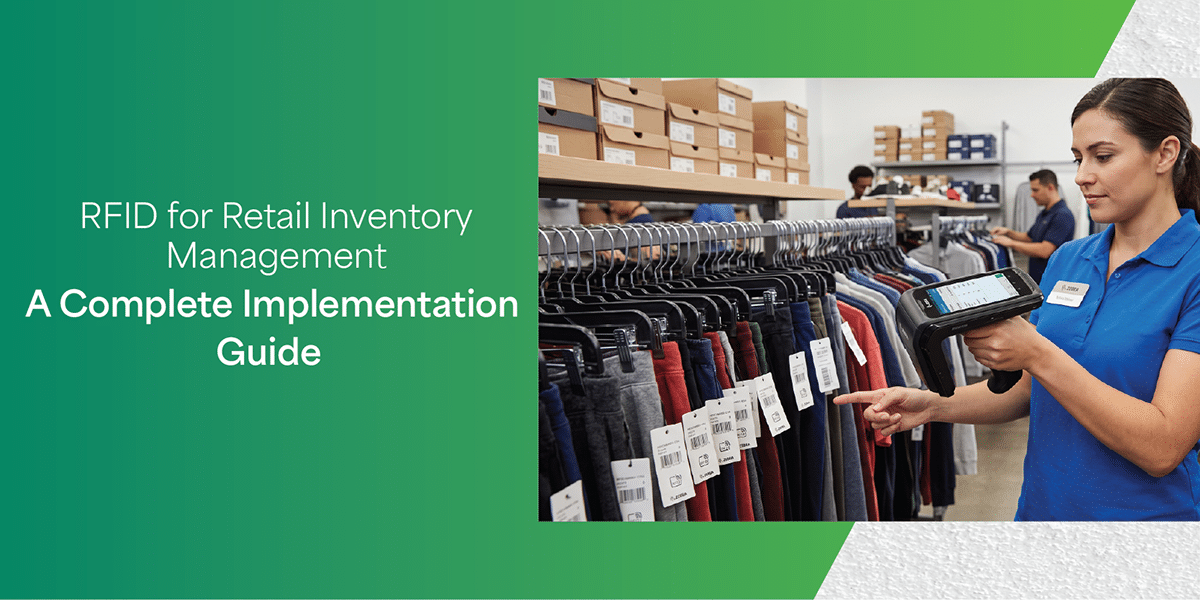
This is where RFID comes in. By automating tracking and offering instant insights, RFID transforms how retailers manage inventory. In this guide, we’ll walk through everything you need to know, from understanding the technology to implementing it step by step.
Understanding RFID Technology
RFID is a wireless system that uses radio waves to identify and track items.
Key components:
- Labels: Small chips attached to products; can be passive (powered by reader signals) or active (battery-powered).
- Readers: Devices that capture tag data, either handheld or fixed.
- Antennas: Help transmit signals between labels and readers.
- RFID Software: Integrates data into inventory systems for analysis and reporting.
RFID vs. Barcodes
| Feature | RFID | Barcodes |
| Scanning method | Uses radio waves; no line-of-sight needed | Requires direct line-of-sight scanning |
| Speed | Can read multiple items at once | Reads one item at a time |
| Data capacity | Stores more information (e.g., product details, serial numbers) | Limited to basic codes (usually numeric/ID) |
| Durability | Labels are more resistant to wear and tear | Labels can fade, tear, or become unreadable |
| Automation | Enables real-time tracking and automated updates | Manual scanning required for each item |
| Cost | Higher upfront investment (labels, readers, software) | Lower cost; widely adopted and inexpensive |
| Accuracy | Reduces human error with automated reads | Prone to errors if codes are damaged or mis-scanned |
Retail benefits: Real-time visibility, reduced manual work, and improved stock count accuracy.
Why RFID for Retail Inventory Management

Reduced stockouts and overstocking
RFID provides real-time visibility into product levels, helping retailers avoid empty shelves or excess stock. This ensures inventory is balanced, reduces waste, and keeps customers satisfied with consistent product availability.
Improved customer experience
Accurate inventory data means customers can trust product availability both in-store and online. RFID helps retailers deliver seamless shopping experiences by providing reliable stock information, reducing frustration and increasing loyalty.
Faster audits
Traditional cycle counts can take hours or days, but RFID enables quick, automated scans of multiple items at once. This saves time, reduces labor costs, and improves overall inventory accuracy.
Loss prevention
RFID labels track items more effectively, helping retailers identify shrinkage and theft. By monitoring product movement, businesses can reduce losses, improve accountability, and strengthen security across stores.
Omnichannel integration
RFID ensures accurate inventory across physical and digital channels, supporting services like “buy online, pick up in store.” This integration improves efficiency, reduces errors, and enhances customer satisfaction in omnichannel retail strategies.
Pre-Implementation Planning
Before diving in, retailers should:
Assess current processes: Review existing inventory workflows to identify inefficiencies, errors, or delays. Understanding pain points helps retailers know where RFID can deliver the most impact.
Set clear goals: Define measurable objectives such as improving stock accuracy, reducing shrinkage, or speeding up audits. Clear goals ensure RFID implementation stays focused and results-driven.
Budget wisely: Plan for costs including RFID labels, readers, antennas, software, and staff training. A realistic budget prevents overspending and ensures smooth adoption across retail operations.
Engage stakeholders: Involve IT teams, store staff, and operations managers early. Collaboration ensures everyone understands RFID’s benefits and supports the transition to automated inventory management.
Step-by-Step Implementation Guide
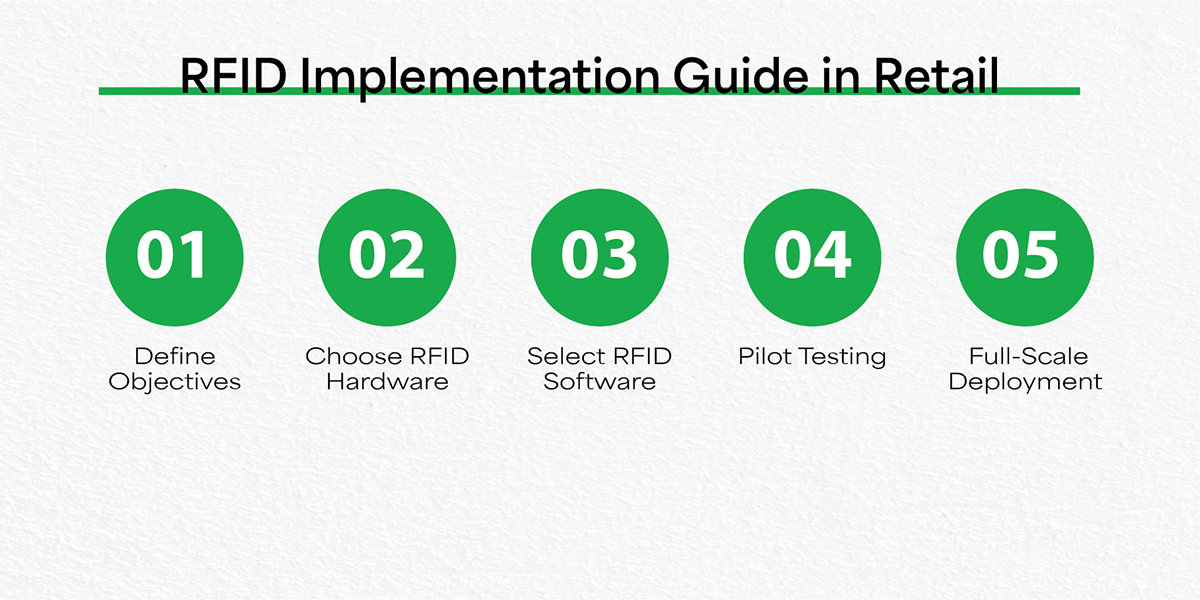
Step 1: Define Objectives
Before investing in RFID, retailers must clearly identify the problems they want to solve. Objectives could include reducing shrinkage, improving inventory accuracy, speeding up audits, or enhancing customer satisfaction. Clear goals guide the entire implementation process.
Step 2: Choose RFID Hardware
Selecting the right hardware is critical.
- Labels: Passive labels are cost-effective and suitable for most retail items, while active labels are used for high-value goods requiring longer read ranges.
- Readers: Handheld readers offer flexibility for audits, while fixed readers provide continuous monitoring at entry points or shelves.
- Antennas: Proper placement ensures reliable coverage and minimizes signal interference.
Step 3: Select RFID Software
Choosing the right software ensures RFID data flows seamlessly into your inventory systems.
- Inventory management integration: The software should connect directly with existing platforms to provide smooth operations and accurate stock updates. Solutions like TagMatiks Retail are designed specifically for retail environments, offering easy deployment and user-friendly dashboards.
- Dashboards and analytics: Retailers need instant visibility into product movement and stock levels. Tools such as TagMatiks Wedge help capture RFID reads efficiently and feed them into analytics systems for actionable insights.
- Compatibility with ERP/POS systems: Ensure the software integrates with enterprise resource planning (ERP) and point-of-sale (POS) systems. This guarantees consistent data across all channels, supporting both in-store and online operations.
Step 4: Pilot Testing
Start small to minimize risk.
- Test RFID in a single store or product category.
- Track key performance indicators (KPIs) such as accuracy, speed, and ROI.
- Use pilot results to refine processes before scaling.
Step 5: Full-Scale Deployment
Once pilot testing proves successful, expand gradually.
- Develop a rollout strategy across multiple stores or regions.
- Train staff to ensure smooth adoption and reduce resistance.
- Continuously monitor performance, optimize workflows, and update systems as needed.
Challenges and Solutions
While RFID adoption may seem complex, each challenge has a practical solution. Retailers can manage costs with phased rollouts, ensuring gradual investment. Technical issues like interference are resolved through proper tag placement and testing. Any staff resistance can be overcome with training and clear communication of benefits.
Finally, data integration becomes smoother when working closely with experienced vendors who connect RFID systems to existing platforms. With the right approach, these challenges transform into opportunities for stronger, more efficient inventory management.
Best Practices for RFID in Retail Inventory Management
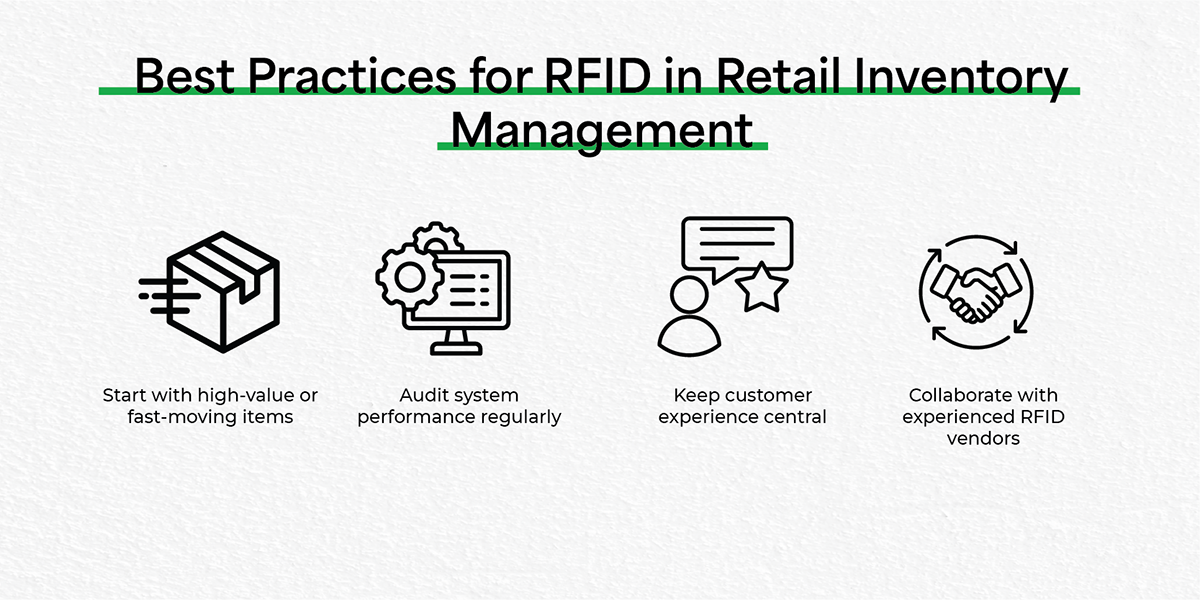
Start with high-value or fast-moving items
Focus RFID implementation on products that sell quickly or carry higher value. This ensures maximum impact, faster ROI, and smoother adoption during early stages.
Audit system performance regularly
Conduct routine checks to confirm RFID accuracy and efficiency. Regular audits help identify issues early, maintain reliability, and ensure the system continues delivering consistent results.
Keep customer experience central
Always prioritize how RFID improves shopping convenience. Accurate stock data enhances trust, reduces frustration, and strengthens customer loyalty across both in-store and online channels.
Collaborate with experienced RFID vendors
Partnering with knowledgeable vendors ensures smoother integration, better training, and ongoing support. Their expertise helps retailers avoid pitfalls and maximize RFID’s long-term benefits.
Future of RFID in Retail
The future of RFID in retail looks promising, with innovations that go beyond inventory tracking. Smart shelves powered by IoT can automatically update stock levels, while AI-driven analytics predict demand and optimize replenishment. RFID-enabled checkout systems reduce queues, creating smoother shopping experiences.
Additionally, better inventory control supports sustainability by minimizing waste and overproduction. Together, these advancements show how RFID will continue to transform retail operations, making them more efficient, customer-focused, and environmentally responsible.
Conclusion
RFID is no longer futuristic; it is a proven solution transforming retail inventory management. By following a structured roadmap, retailers can reduce errors, boost efficiency, and enhance customer satisfaction.
Starting with a pilot project allows businesses to measure results and scale confidently. The future of retail will be led by those who embrace RFID today, ensuring smarter operations and stronger customer trust.