 RFID4U
Introduction
Electronics such as smartphones, laptops, and appliances are among the most in-demand products in e-commerce. For Shopify retailers, these items represent high-value inventory that requires precise management. Unfortunately, traditional methods often fall short—leading to shrinkage, miscounts, and fulfillment errors.
By integrating RFID technology with Shopify, merchants gain real-time visibility, improved accuracy, and stronger security. This combination ensures that every product is accounted for, every order is fulfilled correctly, and every customer receives a seamless shopping experience.
Challenges in Managing High-Value Electronics Inventory
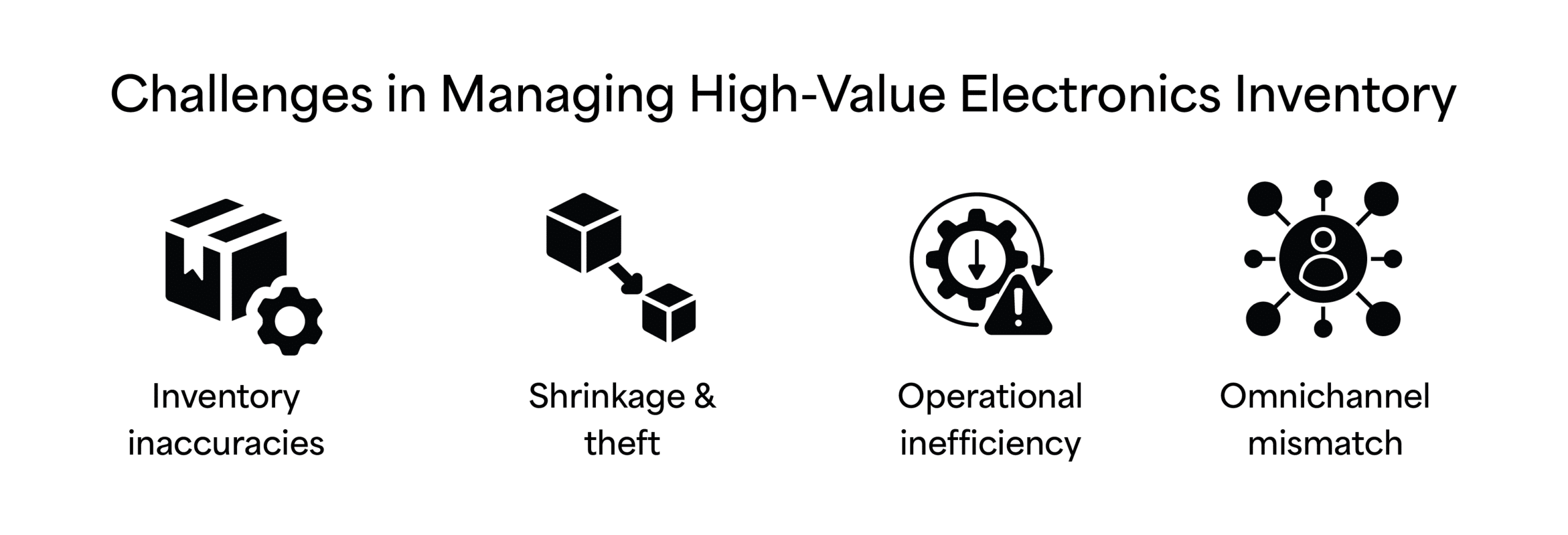
- Inventory inaccuracies: Barcode systems require line-of-sight scanning, which often results in missed items and inaccurate stock counts.
- Shrinkage & theft: Electronics are small, high-value items that are particularly vulnerable to theft and misplacement.
- Operational inefficiency: Manual audits can take hours or even days, slowing down operations.
- Omnichannel mismatch: Discrepancies between online and offline stock levels lead to overselling, stockouts, and frustrated customers.
Why RFID is the Solution
- Automated scanning: RFID readers can scan hundreds of items in seconds without line-of-sight.
- Real-time visibility: Merchants always know what’s in stock, preventing phantom inventory and overselling.
- Enhanced security: RFID tags help track misplaced or stolen items, reducing shrinkage.
- Cost efficiency: Passive RFID tags are now affordable, making them practical for electronics retailers.
RFID Integration with Shopify
RFID becomes most effective when directly integrated into Shopify’s ecosystem. It synchronizes POS systems to unify stock visibility across online and offline channels while automating audits, replenishment, and fulfillment workflows, ensuring faster operations and accurate inventory management.
TagMatiks RFID Connect for Shopify
TagMatiks RFID Connect is a plug-and-play app that integrates RFID tags, readers, and Shopify inventory systems. Designed to work with TagMatiks Retail, it enables real-time item-level tracking for electronics SKUs, supports RFID label printing, and simplifies cycle counts. Available on the Shopify App Store, it helps retailers reduce shrinkage, speed up audits, and maintain consistent stock accuracy across online and offline channels with minimal technical overhead.
Benefits for Electronics Retailers

Accuracy Boost
RFID improves inventory accuracy from around 60% with barcodes to 95–99%. This ensures electronics retailers maintain precise stock levels, reducing errors and preventing overselling across Shopify’s online and offline channels.
Shrinkage Reduction
High-value electronics SKUs are tracked at item level, helping retailers reduce losses from theft or misplacement. RFID provides visibility and accountability, making shrinkage control more effective than traditional barcode systems.
Operational Speed
Inventory counts that once required hours or days can now be completed in minutes. RFID automation accelerates audits, replenishment, and fulfillment, allowing Shopify merchants to save time and improve efficiency.
Customer Experience
Accurate stock visibility ensures products are available when customers need them. Faster fulfillment and reduced errors improve satisfaction, building trust and loyalty for electronics retailers operating on Shopify.
Compliance & Warranty Tracking
RFID enables traceability for warranties, returns, and compliance requirements. Electronics retailers can track product history, ensuring smoother warranty claims and regulatory adherence while maintaining customer confidence.
Case Example: Electronics Retailer Using RFID
A Shopify merchant specializing in smartphones and laptops adopted RFID technology by tagging each SKU and integrating the system with Shopify POS. This setup provided real-time visibility into inventory, streamlined audits, and ensured accurate synchronization across online and offline channels.
- Outcome: The retailer experienced a 30% reduction in shrinkage and an 80% improvement in audit speed. Customers benefited from accurate stock availability and faster order fulfilment, resulting in higher satisfaction and stronger trust in the brand.
Implementation Roadmap for Shopify Electronics Retailers
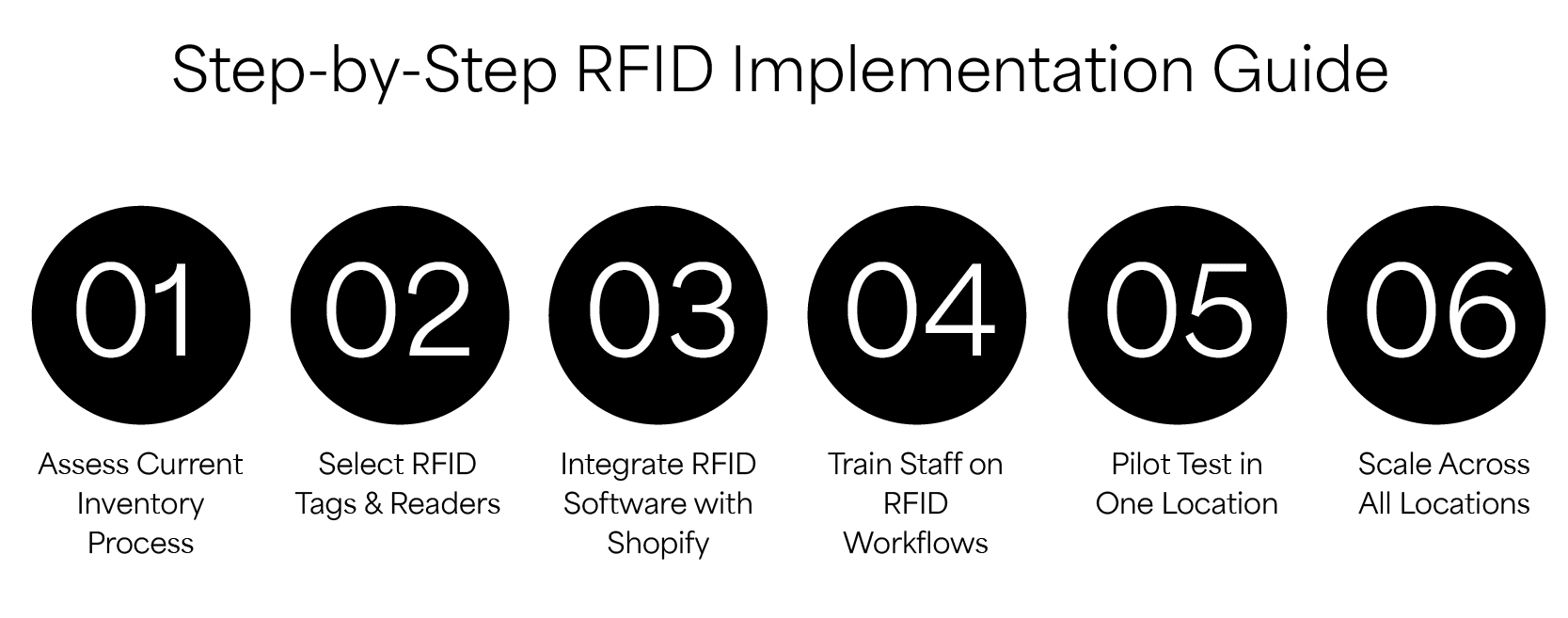
- Assess Current Inventory Process: Evaluate existing workflows to identify inefficiencies in tracking electronics SKUs, ensuring RFID adoption targets the most critical pain points.
- Select RFID Tags & Readers: Choose RFID hardware suited for electronics, ensuring compatibility with Shopify systems and scalability across multiple product categories.
- Integrate RFID Software with Shopify: Implement solutions like TagMatiks RFID Connect to synchronize RFID data with Shopify, enabling real-time visibility and automated updates.
- Train Staff on RFID Workflows: Educate employees on RFID usage, cycle counts, and audits to ensure smooth adoption and maximize operational efficiency.
- Pilot Test in One Location: Run a controlled RFID implementation in a single store or warehouse to validate accuracy, speed, and workflow improvements before scaling.
- Scale Across All Locations: Expand RFID integration across all outlets, ensuring consistent performance, reduced shrinkage, and improved customer experience throughout the retail network.
Conclusion
RFID integration with Shopify empowers electronics retailers to manage high-value inventory with precision, speed, and security. By reducing shrinkage, improving audit efficiency, and ensuring accurate stock visibility, RFID transforms inventory management into a competitive advantage. Retailers adopting solutions like TagMatiks RFID Connect can deliver better customer experiences while strengthening operational performance across all channels.