 RFID4U
RFID (Radio Frequency Identification) tags and readers are essential components of an RFID asset tracking system. They work together to provide accurate and efficient tracking of assets in various industries.
RFID Tags/Labels for RFID Asset Tracking
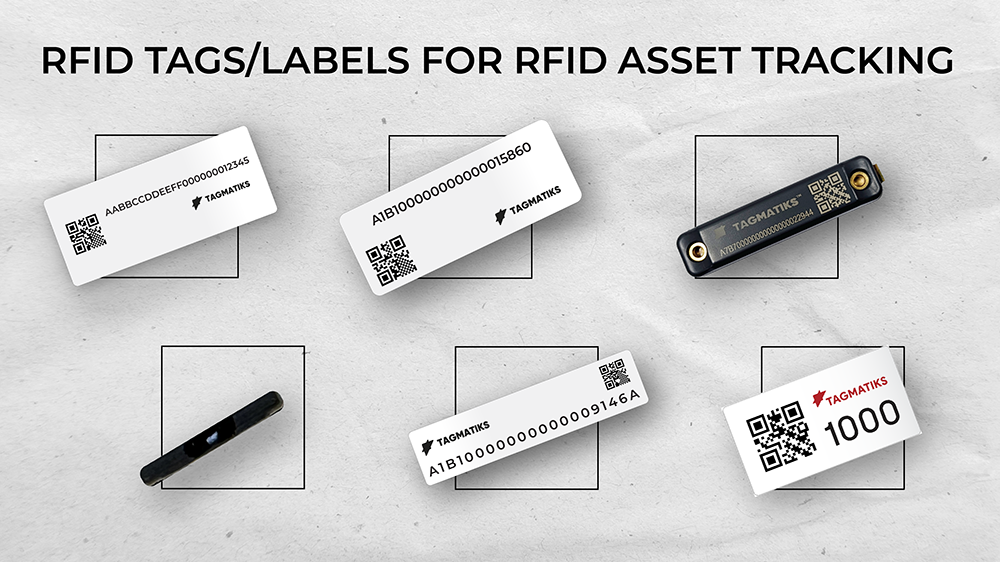
Function: RFID tags for asset tracking are small devices that store data and are attached to assets. This data can include information about the asset, such as its name, location, and condition.
Types of RFID tags and labels for RFID asset tracking
Passive RFID tags: These tags do not have their own power source and rely on the energy from the RFID reader to transmit data. They are commonly used for tracking items like inventory, tools, and documents.
Active RFID tags: These tags have a built-in battery that powers the tag and allows it to transmit data continuously. They are typically used for tracking high-value assets that require real-time monitoring, such as vehicles, equipment, and personnel.
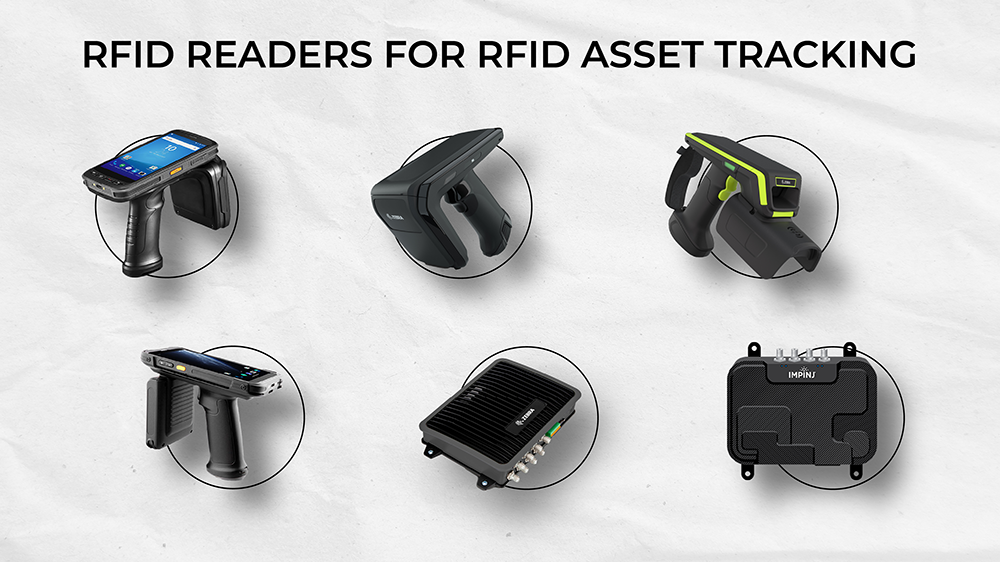
RFID readers for RFID asset tracking
Function of RFID readers:
RFID readers for asset tracking are devices that read the data stored on RFID tags.They emit radio waves that activate the tags and receive the data transmitted by the tags.
Types of RFID readers for RFID asset tracking
Fixed RFID readers for asset tracking: These readers are typically mounted in a specific location, such as a doorway or a warehouse, and are used to track assets as they pass through that location.
Mobile RFID readers for RFID asset tracking: These readers are portable and can be used to track assets in different locations. They are often used for inventory management and asset searches.
Handheld RFID readers for RFID asset tracking: Handheld RFID readers enable mobile asset tracking. They scan RFID tags, offering quick, bulk data capture without line-of-sight. Used in inventory, logistics, and asset management, they boost efficiency and accuracy.
How RFID Asset Tracking Works
Tagging: In an RFID-based asset tracking system, an RFID tag/label is attached to each asset that needs to be tracked.
Reading: An RFID reader emits radio waves that activate the tags within its range.
Data transmission: The tags transmit their data back to the reader.
Data collection: The reader collects the data from the tags and sends it to a computer system.
Tracking: The computer system uses the data to track the location and status of the assets.
Benefits of RFID Asset Tracking
Improved accuracy: RFID tracking is more accurate than manual tracking methods, as it eliminates the risk of human error.
Increased efficiency: RFID tracking can automate the process of asset tracking, which saves time and resources.
Real-time visibility: RFID tracking provides real-time visibility into the location and status of assets, which can help businesses make better decisions.
Reduced costs because of RFID asset tracking software: RFID tracking can help businesses reduce costs by improving inventory management, preventing asset loss, and streamlining operations.
Choosing the Right RFID Tags and Readers for asset tracking is very important.
The choice of RFID tags and readers will depend on the specific needs of the asset tracking system.
Factors to consider include
Factors to consider when choosing RFID readers and RFID tags for RFID asset tracking.
Type of asset: The type of asset being tracked will determine the type of tag that is needed. For example, active tags are typically used for high-value assets, while passive tags are used for less expensive items.
Environment: The environment in which the assets will be tracked will also affect the choice of tags and readers. For example, tags used in harsh environments need to be more durable.
Read range: The read range of the tags and readers will determine how far away the reader can detect the tags will taking RFID asset inventory.
Cost: The cost of the tags and readers is also a factor to consider will choosing RFID tags and RFID readers.
Applications of RFID Asset Tracking
RFID asset tracking is used in a variety of industries, including:
Healthcare: Tracking of medical equipment, pharmaceuticals, and patient records.
Manufacturing: Tracking of raw materials, work-in-progress, and finished goods.
Logistics: Tracking of shipments and containers.
Retail: Tracking of inventory and preventing theft.
Construction: Tracking of tools and equipment.
Overall, a well-implemented RFID asset management system ensures businesses can track assets efficiently and accurately.By using RFID technology, businesses can improve their operations, reduce costs, and gain better visibility into their assets.