 RFID4U
Introduction
Expiry management is critical in health and personal care retail, where products like medicines, supplements, and cosmetics directly impact consumer safety. Manual tracking often leads to errors, missed deadlines, and compliance risks. RFID technology offers a smarter solution by automating expiry monitoring, ensuring accuracy, and protecting customer trust.
The Problem: Expiry Management in Retail
Retailers in this sector handle thousands of SKUs with varying shelf lives. Manually checking expiry dates is time-consuming and prone to mistakes. Expired products on shelves can damage brand reputation, lead to regulatory penalties, and compromise customer safety. Traditional barcode systems lack real-time visibility, making expiry management inefficient and reactive rather than proactive.
How RFID Enables Expiry Tracking
RFID tags can store product details, including expiry dates, and communicate them wirelessly. Retailers can scan multiple items simultaneously, reducing manual effort. Real-time alerts notify staff when products are nearing expiry, enabling timely removal or markdowns. Integration with inventory systems ensures expiry data flows seamlessly into POS and ERP platforms, supporting automated decision-making.
Benefits of RFID Expiry Tracking
Accuracy
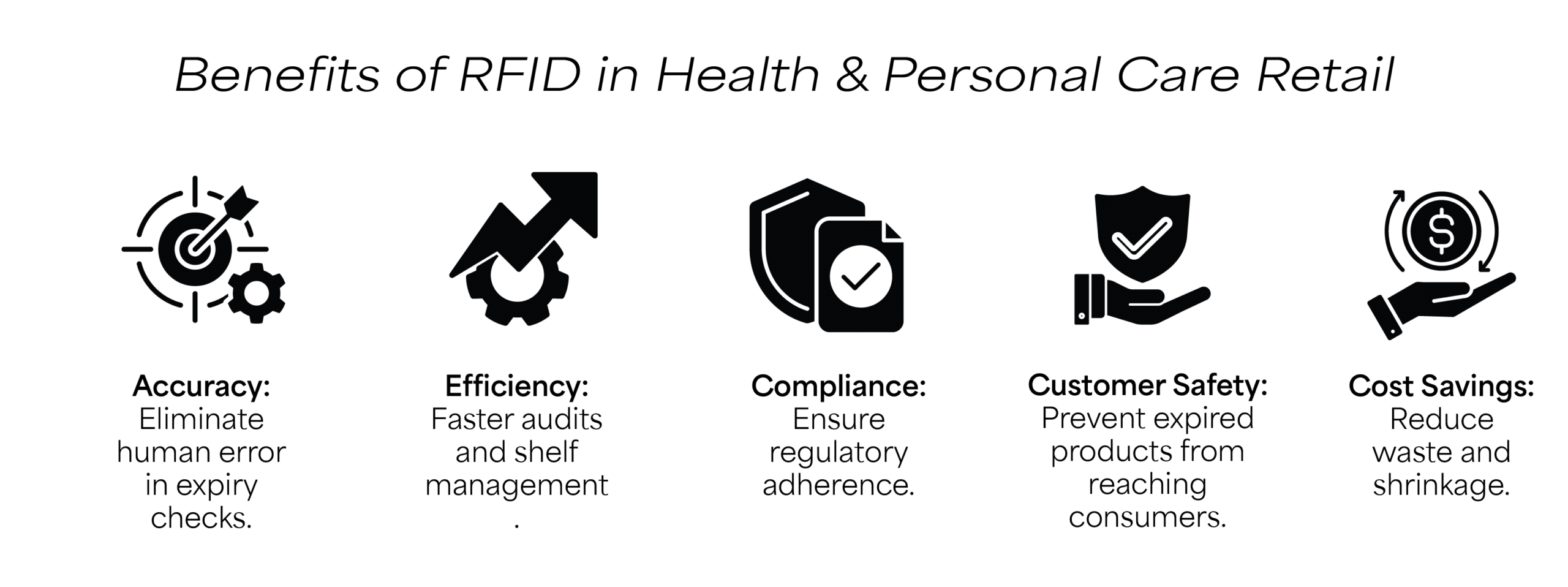
RFID eliminates human error by automatically capturing expiry data during scans. Unlike manual checks, it ensures precise monitoring across thousands of SKUs, reducing mistakes and guaranteeing that expiry-sensitive products are managed with complete reliability.
Efficiency
Audits and shelf checks become faster with RFID, as multiple items can be scanned simultaneously without line-of-sight. This streamlines workflows, saves staff time, and allows retailers to focus on customer service instead of manual expiry checks.
Compliance
RFID supports regulatory compliance by ensuring expired items are flagged and removed promptly. Automated reporting provides transparent records for audits, helping retailers meet health and safety standards while avoiding penalties and protecting brand reputation.
Customer Safety
By preventing expired products from reaching shelves, RFID safeguards consumer health. Real-time alerts ensure timely removal, protecting customers from risks associated with expired medicines, supplements, or cosmetics, and reinforcing trust in the retailer’s commitment to safety.
Cost Savings
Proactive expiry management reduces waste and shrinkage. Retailers can mark down items nearing expiry or redistribute stock before it becomes unsellable, cutting losses and improving profitability while maintaining efficient inventory turnover.
Use Cases of RFID in Health & Personal Care Retail
Pharmacies & Drugstores
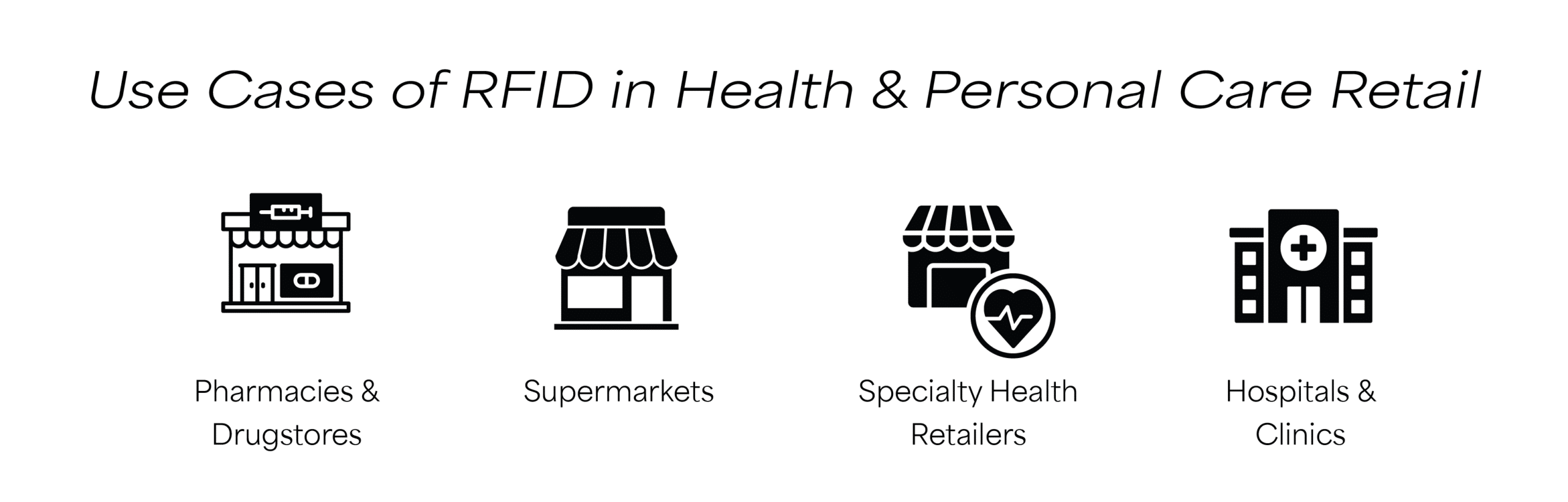
Pharmacies handle thousands of medicines with strict expiry dates. RFID ensures expired stock is flagged and removed promptly, reducing compliance risks and protecting patient safety while streamlining inventory management across prescription and over-the-counter products.
Supermarkets
Supermarkets stock diverse personal care items like lotions, shampoos, and hygiene products. RFID enables real-time expiry monitoring, helping staff quickly identify items nearing expiration, reduce waste, and maintain customer trust by keeping shelves stocked with safe, fresh products.
Specialty Health Retailers
Retailers selling vitamins, supplements, and cosmetics face short shelf lives and high SKU variety. RFID provides automated expiry alerts, ensuring timely removal or markdowns, improving compliance, and enhancing customer confidence in product quality and safety.
Hospitals & Clinics
Healthcare facilities often operate retail outlets for medicines and consumables. RFID helps track expiry-sensitive stock, ensuring safe inventory for patients and visitors, reducing manual errors, and supporting compliance with healthcare regulations through automated monitoring and reporting.
Implementation Considerations
Successful adoption requires selecting the right RFID labels and readers suited for product packaging. Integration with POS and ERP systems ensures expiry data is actionable. Staff training is essential to adapt workflows to automated expiry checks. Retailers should also evaluate ROI, balancing upfront costs against long-term savings from reduced waste and improved compliance.
TagMatiks Retail
TagMatiks Retail is a cloud-based RFID software designed specifically for retail inventory management. It helps retailers achieve up to 99% inventory accuracy, reduce shrinkage, and improve replenishment speed. Key features include:
Cycle Counting & Audits: RFID handhelds enable faster cycle counts, reducing manual effort and improving accuracy.
Real-Time Visibility: Cloud dashboards and mobile apps provide instant insights into expiry-sensitive inventory.
Integration: APIs connect seamlessly with POS, ERP, and e-commerce platforms like Shopify and BigCommerce.
Shrinkage Reduction: Real-time tracking discourages theft and loss, ensuring expiry-sensitive items are accounted for.
Customer Experience: Accurate stock visibility supports omnichannel services like Buy Online, Pick Up In Store (BOPIS), ensuring products are available when needed.
By combining expiry tracking with advanced inventory management, TagMatiks Retail strengthens compliance, reduces waste, and enhances customer trust in health and personal care retail.
Conclusion
RFID is a game-changer for expiry tracking in health and personal care retail. By automating expiry management, retailers can enhance safety, compliance, and customer trust. With solutions like TagMatiks, businesses are better positioned for long-term success, reducing waste and ensuring consumers always receive safe, high-quality products.